Category: Book Promotion Series
Showing posts with label Book Promotion Series. Show all posts

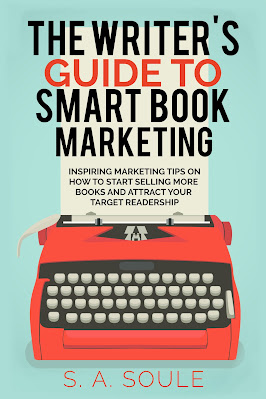
The Writer's Guide to Smart & Cheap Book Marketing

February 7, 2024 No comments

Hi, everyone!

I have a new guidebook on promoting your author business like a boss! Now on sale at all major online book retailers. 


 A Comprehensive Guide To Successfully Marketing Your Fiction


Unlock the secrets to successful promotion with this essential guidebook!
 
This in-depth marketing guide is perfect for writers publishing their first novel or indie authors trying to gain a wider readership. 

Tailored for authors navigating the dynamic world of book marketing, this updated resource blends proven strategies with fresh insights. From social media savvy to mastering email campaigns, organizing captivating events to effective paid advertising, this guide covers it all.
 
Whether you're a budding author or looking to invigorate your backlist, you’ll find easy-to-follow, budget-friendly tactics that resonate. Packed with tons of advice, relatable anecdotes, inspiring tips, and practical wisdom, it's your roadmap to turning your literary dreams into reality.

Dive in and discover how to make your book stand out in the ever-evolving digital marketplace!


Wishing everyone much success on their creative journey!

The Cozy Mystery Writer Resource Guide

February 19, 2023 No comments


Hi everyone!

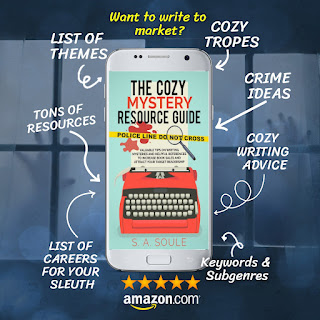
I just wanted to let my cozy mystery writer friends who follow this site know that "The Cozy Mystery Resource Guide" is a great addition to your writer toolbox. Whether you write cozy mysteries or cozy paranormal mysteries, this inspirational guidebook will help you find success.

🔎 ☠️ 🔍


This amazing handbook offers cozy mystery writers a ton of great resources to hone their craft and market their books.

⭐This handbook is packed with useful information and tons of resources! The content provides cozy mystery writing advice, along with an inspirational list of genre tropes, themes, story prompts, crimes, cozy settings, jobs, hobbies, keywords, subgenres, and so much more to inspire your creative muse.

⭐The reference sections will save cozy mystery writers time and energy searching for online resources that includes links to plot templates, reliable and professional services (designers, marketing, premade plots, editors, etc.), cozy and mystery groups on Facebook, cozy marketing and writing courses, and a handy catalogue of mystery writing and plotting handbooks. In addition to a directory of marketing sites and a list of book reviewers and bloggers to help promote your work.

⭐Plus, as a special bonus, this handbook includes interviews with several bestselling cozy authors, offering inspirational advice and writing tips. This handbook is recommended for cozy mystery writers at every level of their career.

🕵️ ☠️ 🕵️

Are you ready to target your ideal readership, craft a page-turning read, and embark on a successful writing career?

Start reading your copy today from Amazon: https://tinyurl.com/yw2r6j9p

Barnes & Noble: https://bit.ly/3PD7EyX

Other book retail sites: https://books2read.com/u/3J6wkJ

5 Amazing Tips on Author Promotion and Marketing - Self-Publishing Tips Part #2

May 1, 2022 No comments
https://www.amazon.com/S.-A.-Soule/e/B017Y1KM2I/
5 Amazing Tips on Author Promotion and Marketing

These tips should help you promote your novel successfully and gain new readers…

Okay, to start off your book’s marketing campaign, I would browse Fiverr and use a few of the $5 promos offered on book promotion there. A lot of Indies like Bknights on Fiverr who promotes on Facebook to hundreds of followers. I would also start contacting book bloggers who read your genre.

I have used book blog tours in the past, but to me personally, 20 stops is not enough to generate much buzz about your current release. I would aim for at least 50 to 100. I know it sounds like a lot, but once you get your “book review request letter” polished and have a list of bloggers to contact, it will go quickly and smoothly.

I'm sure you've already realized by now that there is a ton of different ways to build a readership, obtain honest book reviews, and promote your novels. If you want to achieve success, one important factor is getting books reviews. For online retailers like Amazon, getting reviews is crucial to getting your novel recognized by the website's recommendation algorithm. The best way to start is to contact book review bloggers and send them a request to read and review your novel.

Let's start with the basics, requesting someone to read and review your novel. There is a "right" way and a "wrong" way to approach book bloggers and reviewers about reading your work. And I would write up at least five guest posts on subjects related to your book to also offer bloggers.

Knowing the genre and sub-genres of your novel is an important part of the first step and it will save you a lot of time. Do you write cozy mysteries? Dark and spooky horror? Light and fluffy contemporary romance?

If you're not sure what your genre or sub-genres are just go online to places like Goodreads, Shelfari, Library Thing, Gnooks, or WhichBook and search for other authors whose writing style is close to your own. Visit the books page and read some of the reviews. (I don't recommend contacting readers or book reviewers through these sites and soliciting your novel or series. It is unprofessional and impolite. These are considered social forums to discuss literature. Instead, join some of the groups and discussions and if you make some new friends, then casually tell them about your novel.)

Here is a few links to bloggers who might be interested in reviewing or hosting a guest post on these sites:  


I strongly recommend that you read each blogger's review policy carefully. When requesting a review or promo, ALWAYS use the reviewers first name. (They can be touchy about this.) Put "Book Review Request" in every subject line. In your email request, include the following info that I pasted below. 


This first example is from my own personal email letter for one of the books the Charmed Chronicles that you can use as a template.


I suggest that you create your own “review request” template and save it on your computer.
 
Book Promo Request email letter example:

Dear (add blogger OR reviewer name here),

I see that you reviewed the book [Book Name Here] before. I have written a similar book and I thought you might enjoy reading and reviewing mine too.


Would you be willing to let me provide you with a copy of the novel in hopes that you would consider reviewing my book as well?


My name is [Your Name] and the novel is titled [Your Book Title]. You can find a link to it here. [Give link to your book here].


I can provide it to you as an eBook, or if you wish I can even send you a printed copy.


I understand that you are under no obligation to leave an honest review my book. Thank you for your time and consideration. I look forward to your response.
Sincerely,


Your Name


Some reviewers request that you attach the book cover, but in my experience, most email attachments will end up in the reviewer’s Junk Mail / Spam folder, but I do suggest that you provide a link to one. Other reviewers expect you to personalize the email request in some way, which you can, but I personally don’t. 

I think of the request like a “business” transaction and I prefer to remain more professional. There have been occasions where I have mentioned something I read on their site if it pertained to something in my novel, but most times I never even hear back from those bloggers. 


And I don’t put hyperlinks into my email because some email programs or smartphones will disable them. I prefer to include the entire URL separately, so they can copy and paste it or click on the link.


I suggest that you create your own “review request” template and save it on your computer.


One thing that might help narrow down your search for possible book bloggers is to look for book reviews of novels in your genre or other authors whose work is similar to yours. And search with keywords for book reviewers. 

For instance, when I was seeking reviews for my paranormal romance novel, IMMORTAL ECLIPSE, I Googled "paranormal romance novel reviews." I also searched with keywords like "Gothic," "urban fantasy," and "dark romance." Be creative and use your keywords wisely. Then from that search, I contacted book reviewers who read and enjoyed the PNR (paranormal romance) genre.

It took me about a year and countless hours to create my database of about 2,000 book bloggers that I can contact whenever I release a new book. I suggest that you do the same, so that you have a resource of reviewers to contact. 

There is no point in wasting your time or the reviewers by requesting a review from a blog that doesn't even read your genre. Most book bloggers clearly state on the "review policy" page of their site what type of genres they review and don't. Just move on.


If you need help drafting a "book review request" letter, or you just want someone to double-check it before you start emailing reviewers, please feel free to send me an email. I'd be happy to take a look and offer any feedback if needed.

And lastly, I wanted to share this great article on book marketing. I recommend taking a few minutes to read this insightful blog post, "Why Your Cover & Blurb Suck" by Rebekah Haskell
Hope this info helps. Best of luck!


7 Ways to Promote Your Fiction Novel Like a Pro! Self-Publishing Tips Part #1 - #writetip #bookpromotion

April 24, 2022 No comments
PART ONE ON INDIE PUBLISHING
 
I love helping indie authors and self-published writers to find success.  Hence, I decided to do a series of posts this week on simple and inexpensive book marketing.
 
These tips should help you promote your novel successfully and gain new readers.

One way to promote your novel(s) is to hire a book tour company. But a word of caution…

Nothing against all these book tour companies, but promoting your novel on twenty blogs is not going to get your book much exposure, and they can be expensive. I have used a few in the past and the results were pitiful. Now that’s not to say there aren’t some great tour businesses out there, but from my own personal experience, I would advise against using them unless they can guarantee at least fifty blogs will participate in the tour and at least twenty-five reviews will be posted prior to your launch day. Anything less isn’t worth your money or your time.

In my own personal experience, I did get some exposure through using book blog tour companies, but (and correct me if I'm wrong) you usually only get about 20 to 30 stops for your money, and no guarantee of reviews.

I didn't think it was worth the money, so I decided (by trial and error. Yes, I made a few stupid mistakes!) to do it myself. I drafted about 5 versions until I had a solid email (book review request) letter to send out (Will post an example of it in my next post). Then I created about 10 to 15 guest posts on topics related to themes or subjects in my book and included it in my email.

So if a book blogger wasn’t interested in reviewing my book or had an overflowing TBR pile, I offered a guest post instead. And 8 out of 10 times, the book blogger said they’d love to host me on their blog.

Readers loved my guest posts and I got a lot of sales from them. I offered fun quizzes to heartfelt posts on my own writing journey. At the bottom of each post, I included my book cover, the blurb, purchase links, and my Bio.

A word about guest posts. As a former book blogger, I loved helping indie authors promote their work, but the lack of professional posts made me cringe. Some writers rambled on about nothing in particular or their posts were not even related to their book. Other guest posts were sloppily put together and they were not even spell-checked.
I strongly recommend that you have it edited and polished. These represent you and your writing. So if they look unprofessional, or the post is riddled with typos and misspelled words, then potential readers may think your book is too.

Do you really expect readers to buy your book after reading your poorly written post? If the guest post appears amateurish, then readers will assume the novel does, too.

Most book bloggers love working with me. I create fun and interesting guest posts pertaining to my novels, and I make it super easy for them to publish on their site. I am quick to respond to emails and send everything they need within 24 hours: the guest post in a Word Doc (so they can copy and paste), the book cover, blog banner (I created one myself), and the rafflecopter code if I'm doing a giveaway.

Here is a list of a few of the guest posts that I wrote for my last promo for my new novel, LOST IN STARLIGHT to give you some ideas. I included the list in my email to book bloggers that offered to feature guest spots by indie authors, and I had a wonderful response. 

A FEW EXAMPLES:

•    Starlight Saga Music Playlist
•    Which Character Would You Be? Quiz
•    Author Spotlight with Bio
•    Book Cover Reveal (full-print image) with blurb
•    Character Interview with heroine
•    Guest post of my “Dream Cast” with photos
•    Favorite Character Moments with excerpts
•    First Chapter excerpt
•    Why I love the YA Genre guest post


As you can see from my list, I found creative ways to make sure my posts were intriguing. I wanted to provide bloggers and potential readers with unique and entertaining promotional material to discover more about my books and me. I create different posts for each novel or series depending on the novel’s theme and genre.

For my adult novel, IMMORTAL ECLIPSE, I put together these:

•    Witty and entertaining quotes from fashionatas
•    Immortal Quiz with Amazon gift card giveaway
•    Paranormal Fun Facts about the novel
•    Supernatural Pet Quiz
•    Exclusive excerpt from the novel

Hopefully these will give you some ideas of creating fantastic guest posts of your own.

Hope this info helps. Best of luck!


Proven Marketing Tips to Increase Sales on a Backlist

November 5, 2018 1 comment


Recommended reading to help indie authors sell more books:"Relaunch Your Novel: Breathe Life Into Your Backlist"

Have you launched a novel, or many novels, only to have them land with a whimper? 


Have you had a great selling book or series slowly fade away to obscurity? 

What if you could relaunch those books, turning your backlist into a great source of income?

You can. This book will teach you:
- How to analyze your previous launches to determine failure points
- How to turn your backlist into an automated system that feeds readers back into your other books
- What types of relaunches exist, and which is right for your book.
- How other authors have successfully relaunched. What worked, and what didn’t.
- How to use keywords to successfully attract your target readership, including using keywords in your title
- How your book cover can negatively impact sells


***
 

This guide is great to read even if you haven't published a book yet. The advice in this book helped me to increase my own book sales and revive my backlist.

Actually, I recommend reading all of Chris Fox's informative writing and marketing guides. :-)


3 Book Cover Secrets Revealed - Self-Publishing Tips Part #13

October 20, 2018 No comments
https://www.amazon.com/Fiction-Writing-Tools-7-Book/dp/B01IVVHTEO

“Book covers are extremely important. The original cover of Elemental came off as very paranormal romance-y. And, unfortunately, it attracted readers who were avid paranormal romance fans. Many of them responded negatively to being surprised with a space opera with very little romance. 

A cover is a form of communication. It has to pique the interest of your target audience. If you pique the interest of someone who isn’t going to like what’s inside the book, then you’ve just wasted your time and money on the wrong cover.” ~Emily White, bestselling indie author 


I realize that I can get kind of preachy about book cover design, but it’s only because I’ve made my own fair share of blunders, and I have a heartfelt desire to help other indie authors, and it is only to help the writer brain switch from storyteller mode into a smart book marketer. 


The biggest obstacle for most self-published authors is understanding and acknowledging that covers should be extremely "genre specific." A genre cover will tell the reader instantly what kind of book it is: self-help, urban fantasy, new adult romance, mystery/thriller, chick-lit, and so on.


BOOK COVERS DON’T REALLY MATTER!

Based on that statement, anyone reading this post would assume that it’s the story within the novel that really counts and not the book cover. 


Well, that kind of thinking will only hinder book sales. Now please allow me explain why...

https://www.amazon.com/gp/product/B07B86HPCX/

For example, could anyone identify just by glancing at the odd cover posted above what genre the story is, or even what the book is about? 

Perhaps it’s a mystery because of the giant blue eyeball or maybe a paranormal novel, but it’s really hard to even make a good guess. 


And that’s the crutch, a writer never wants a potential reader guessing or feeling confused by their cover design because then they move on to the next book that has obvious genre “tells.”


If a book cover doesn’t match the current trends in the genre, then there’s a good chance that the story won’t reach the author’s intended audience. And if the book cover isn’t genre specific enough, then chances are a writer won’t sell as many books. (I use the term “genre specific” throughout the narrative, meaning a design that looks similar to others in the same genre category as the story.)


Think of your book covers as your business card and a big part of your marketing campaign. If they look professional, then readers will assume that the writing is, too. Your book has a better chance of attracting readers with the right cover.

https://www.amazon.com/gp/product/B07B86HPCX/

For example, in the cover featured above, what do you think this book would be about? What is the genre? 

Maybe it’s about an airline pilot who loves his cat and likes to take long walks during a full, green moon. Or maybe his cat is stuck in the tree. That would be a good guess, but it still doesn’t reflect any specific genre. And there are so many things wrong with it that it’s hard to know where to start! The fonts are generic and don’t match. There are too many different images that don’t blend together or make any sense. The entire design looks unprofessional. 


In other words, it is not “genre specific” enough to reach its intended audience.
To attract the right readership, a professional cover should give readers an instant idea of the genre and a hint about what the story entails. 


But some of you might be scratching your heads and asking yourself, what does “professional cover” mean?


Regrettably, there’s no correct answer, but I think most readers can easily recognize a professional-looking design when they see it. While a cover doesn’t need to be perfect, the design does have to meet a certain genre standard, because in the publishing industry, professional looking also implies recognizable. 


A professional cover must correspond with the reader’s expectations, while having a familiar look to other covers in the same genre. The more distinct or unique a cover is, the more it wanders away from the current trends in design, and could result in lost sales. 


And lastly, I wanted to share this great article on book marketing. I recommend taking a few minutes to read this insightful blog post, "Why Your Cover & Blurb Suck" by Rebekah Haskell


4 Guaranteed Things to Try If You’re Book Are Sales Are Down - Self-Publishing Tips Part #12

December 22, 2015 No comments

Here are four guaranteed things to try if you’re book are sales are down or they have completely stopped. Or if you’ve just published your first book.
And they really do work!
One of the best things about being an indie author or self-published writer is that anytime you want to change something, you can. You can test out different marketing promos, prices, and even book cover designs.
Here is a list of four quick and easy things to do if you want to reach your target readership and increase book sales.

 1 ) The Cover is like the illustrated summary of your story, yet the design should match the genre to attract readers.
The design needs to reveal to the reader the genre and tone of the book (like the example above) at a glance. It should grab them immediately. But most importantly, it should be genre specific to attract the target audience for your book.
Self-published writers do not have huge marketing departments backing them like traditional authors do, so please consider giving your book the best chance of piquing a reader’s interest by having a design that “fits” the genre.
The book cover is only packaging. It’s like an advertisement or stop sign. It’s main purpose is to attract readers and get them enticed enough to read the blurb and excerpt. That’s it.
Most writers will have a cover designed to their specifications without researching the trends on book covers in their genre. To effectively market a product (and yes, your book is a product) I suggest that authors study their competition and get a “genre specific” cover to ensure success.
So the first thing to try is a new book cover to see if that helps sales. 

And lastly, I wanted to share this great article on book marketing. I recommend taking a few minutes to read this insightful blog post, "Why Your Cover & Blurb Suck" by Rebekah Haskell
 
2) The blurb (back jacket copy) should be a teaser with a powerful “hook” that lures the reader to want to buy your book.

Consider how readers look for books. They browse through lists of novels, looking at the cover art and titles, and then the price and often the star rating. Then if those things have grabbed their interest, they scroll down the page and read the book description.
This is marketing copy, not a synopsis. Keep it brief. Keep it interesting. Keep it engaging. Don’t bog it down with too many details about the plot or subplot. Use persuasive, strong nouns, adverbs, and verbs to describe your novel.

Strive for quality—not quantity.

Superb back jacket copy never explains every characters background, every plot twist, or pinch-point of your story. Write a blurb that is descriptive, but not all-inclusive. Think tempting, but not embellished.

One way to get a better understanding of good promotional copy is to read the blurbs of other published novels in your genre. Visit a library, bookstore, or search online at places like Goodreads to read the descriptions. Whenever you find a blurb that really grabs your attention, see if it gives you some ideas for your own product description.

Once you have a few blurbs written down that you like, find a critique partner to help you polish it. Or ask a friend or writing buddy, who’s familiar with your premise, and have them write a brief summary of your storyline, noting the detailed plot points they enjoyed. This is an excellent way to gain an invaluable assessment of your storyline.

Another excellent way to help you write a blurb is to excerpt your own work. Try this, comb through your entire manuscript searching for paragraphs or phrases to quote. This method can be very effective if you find a strong passage that can be taken out of context and still make sense. 
Whether you plan to self-publish or work with a publisher, it’s crucial to know how to create an appealing blurb for your book—one that’s compelling enough to entice a reader into buying your book.
If you’re a writer who has trouble creating a strong blurb for your work, please consider hiring someone to help.

3) The Sample (opening scene) is an important part of getting your potential buyer to click on the “buy” button.
For a sample to get the reader to buy your book, the opener must have three things: Conflict, action, and empathy.
Without strong hooks, the reader has no reason to keep reading. A good “hook” can be an open-ended question, one that leaves the reader trying to decide what the main character will do next. 
Published authors have the fortunate advantage of starting a novel or short story anyway they’d like. They’re an established name within the industry and already have an existing readership. However, if you’re an newbie writer and you’re planning to self-publish, things are not quite so simple, and agents and editors are not quite so tolerant or lenient. And remember that the competition is fierce. 
If you’re not sure your opening is strong enough, please consider hiring an editor to critique your first chapter. 


4) Pricing a book is vital to getting a reader to take a chance on your book by purchasing a copy.

Your first book, or the first in a series should be the loss leader. The price should be between $0.99 to $2.99, especially for a first book. The idea is to get the reader hooked on your writing style, and then raise the price for all your other books. Lowering the price will make potential readers more likely to buy your book and take a chance on an unknown author.
According to the Smashwords survey, it seems that $2.99 to $3.99 are the sweet spots of fiction eBook pricing.
While pricing for nonfiction can be slightly higher, I suggest keeping the eBook under $6.99. The number of pages should impact the price.

I realize that you worked hard on your book and spent money on the cover design and editing, but to become more visible and market your work effectively, one of your books should become a loss leader. Readers seeing an eBook priced at $8.99 by an author they’ve never heard of, will most likely keep looking, and buy a book at a much lower price from someone else.
Once a writer has built a loyal readership and a huge fanbase, then they can raise the prices of their books.

 I sincerely hope this advice helps you to sell more books!


YA Bloggers to Review Your Novel - Self-Publishing Tips Part #10 - #indieauthor #bookmarketing

October 30, 2015 1 comment
This post is mainly for young adult authors, but whatever genre you write in these tips can help.


If a writer just puts keywords like: "young adult blogger" or "young adult reviews" or "young adult paranormal blogger" into a search engine, they'll find a lot bloggers to contact. 

And another way is to search for other authors whose work is similar to yours and find book bloggers that enjoyed those novels and contact them. If these reviewers likes those types of stories and genre, then it’s a safe bet that they’ll love your story, too. 

Here are a few book blogger/reviewer directories to use: 

http://yabookblogdirectory.blogspot.com/p/ya-book-blogger-list.html

http://yabookblogdirectory.blogspot.com

https://bookbloggerdirectory.wordpress.com/young-adult-book-blogs/ya-general-fiction/ya-general-fiction-a-l

http://yablogosphere.blogspot.com/

http://www.ebookreaderbuzz.com/2012/01/young-adult-book-bloggers-directory.html

http://www.bloggeries.com/literary_blogs/young_adult_childrens/http://kidlitosphere.org/bloggers/

 
These blog posts should help, too. 

 7 Tips on Getting Book Reviews: http://fictionwritingtools.blogspot.com/2015/07/8-tips-on-book-promotion-and-getting.html 

 5 Amazing Tips on Author Promotion and Book Marketing: http://fictionwritingtools.blogspot.com/2015/03/book-promotion-and-marketing-part-2.html

 4 Ways to Successfully Get Book Reviews: http://fictionwritingtools.blogspot.com/2015/03/4-ways-to-successfully-get-book-reviews.html

Marketing Your Young Adult Novel: http://fictionwritingtools.blogspot.com
 /2015/10/marketing-your-young-adult-novel.html
  
 18 Great Tips on Book Promotion: http://fictionwritingtools.blogspot.com/2015/06/16-great-tips-on-book-promotion.html

50 Writing Resources: http://fictionwritingtools.blogspot.com/p/resources.html


Hope this info helps you to find success!


18 Great Tips on Book Promotion - Self-Publishing Tips Part #8 - #IndieAuthor #selfpubbed #Bookpromo

August 22, 2015 No comments

https://www.amazon.com/Fiction-Writing-Tools-7-Book/dp/B01IVVHTEO
PART EIGHT ON BOOK PROMOTION
This is going to be a lot of information and a very long post, so you may want to get comfy and also save it on your computer for future reference…

I’ve been doing this self-publishing thing for over six years and I have read a ton of marketing books, and I’ve also researched and studied author promotion extensively, so I think a lot of it is “trial and error” with marketing. Some things worked for me and others haven’t. You need to find your own niche and go from there.

But a few universal truths to success is to publish new books within a 4 month time-frame, and get lots of reviews posted on Amazon and goodreads, and have a professional-looking book cover (also branding), and lastly an engaging “hook” in your book blurb. All those things are easy to do to help your book beat out the competition.

From my own personal experience, those tips listed below will help any author to start making money and have some success with your book promotion.

Doing the following things listed below helped many of my books become Amazon bestsellers.

TIP 1

A "hooky" blurb is the most important thing a writer needs besides an awesome cover. I've continually tweaked my Product Descriptions. I suggest that you study the books in the Top 100 lists on Amazon. Tips on blurb writing: http://www.thebookdesigner.com/2014/06/karl-bunker
 
(I can help you rework one of your blurbs and give you a html code to upload so it stands out, and offer some more keywords to add, please click HERE for more info.)

TIP 2

The right book cover is critical and having a striking image at thumbnail size is important. A sub-title with keywords can help drive sales, too. This is just my opinion, but maybe updating your book covers, revising your blurbs with more of a “hook,” and adding more keywords in KDP might really help boost sales.


The other authors that I have helped do these simple things said they doubled their sales within 6 weeks. I want to help you, so I can offer you one free cover design if you really want to test out a new cover. Please click HERE  to browse my selection of premade covers.  
TIP 3

On your author Facebook page, marketing studies have proven that posting an image or photo along with EVERY post will get you more “likes” and interest. Make sure your FB page is linked to your Twitter account, too so you can cross-promote on both of these sites.

TIP 4

Join kboards, like right now. Go hang out in the “Writer’s Café” and search through the marketing posts until your eyes bleed. (Well, maybe stop before that.)  http://www.kboards.com/index.php?board=60.0  There is a wealth of awesome book promotion advice on what works and what doesn’t. Plus, quite a few very generous, bestselling indie authors offer tons of great suggestions on a wide range of marketing topics.

TIP 5

Sign up for BUCK BOOKS: http://buckbooks.net/buck-books-promotions  it is free and reaches a large email readership. In order to run a promotion with them, you don't have to pay anything, but you do have to agree to tell others about their service by either sending out a tweet or FB post and signing up for their affiliate account.

TIP 6

A lot of authors have had success with BOOK GORILLA: http://www.bookgorilla.com/advertise  which costs $40 a promotion.

TIP 7

Book bloggers should become your best friends. Start creating a list of bloggers that will host a guest post or review your book(s). But it helps if a writer already has a few reviews posted on places like Amazon and goodreads, which will really help to persuade them to take a chance on an indie author.

You will need a professional letter to request reviews. When you finish writing an email “review request letter,” please send it to me and I’ll double-check it before you send it out. I know for a fact that my books have been bumped up a number of times on a reviewer's TBR pile, because reviewers assumed that my book would be as professional as my review request. They'll start reading with the right impression.

You can search for book bloggers on Google by typing in “book blogger” and  your genre. Example: book blogger review science fiction

To find bloggers in your genre you can go to sites:


And check out Blog Nation, Book Blogger Directory, The Book BloggerList, and BookLook Bloggers to find active bloggers who are seeking indie work.

Each site has its own review policy. Use a spreadsheet to keep track of each blogger’s name, email, and website URL. And I would make sure to carefully follow the blogger’s instructions.

You must send your request in individual emails and use their names. You might consider collecting all the emails and sending out a giant blast, but this is considered spam. The only way to comply with the federal CAN-SPAM Act is to send your request one email at a time.

TIP 8

Authors usually need more reviews posted on Amazon and goodreads to gain exposure. At least ten reviews on Amazon will help because “two digits” seem to be a magic number and anything less might hurt potential sales.

When I chat with other authors about obtaining reviews, it seems as though most writers struggle to get over twenty and have no idea how to get more posted.

Okay, I know some authors will want to burn me at the stake for this suggestion, but please hear me out…

To start, I suggest using Fiverr to get a few reviews posted straightaway, because you do get honest reviews and they will post them within a week. I know other authors who have done it and they’ve had great results. I’m not against paid book reviews nor do I consider it unethical. The paid reviews are honest and they will eventually be lost among the real ones that get posted with all those new sales you'll get.

Many authors are willing to pay hundreds of dollars for a Kirkus Review, but cringe at $5 for a regular one, which makes no sense. 

Kirkus Reviews charges $425.00 for their basic review package. 
BlueInk Reviews charges: $396.00
Publishers Weekly PW Select charges: $149.00

Personally, I'd rather pay $50.00 for ten honest reviews. You can either give Fiverr sellers a link to download the book, or ask them for a “custom gig” to include the cost of your book to get an Amazon “verified purchase.”

However, here is my advice:

Only buy 10 reviews at a time for any book. Don’t ask for a positive review or tell them what to write. Make it clear to the person you hire that you want a normal, honest review. Don’t buy hundreds of them, but promoting a book (even to promotional sites like Bookbub that require a certain number of reviews be posted before they’ll accept your work) is much harder if you start with zero reviews on Amazon or goodreads. 

 Plus, a lot of advertising sites will not promote your book if you don't have any reviews up. Get a couple of them up there right away; it will make it much easier to get more. After you have 50+ regular reviews, then those first 10 reviews won’t matter anymore. (Once I bought 7 Fiverr reviews for one of my books that only had two reviews posted at the time, but I asked the sellers not  to leave five stars reviews and to be honest. Once the reviews were posted, my sales increased a few weeks later and it helped my ranking.)


TIP 9

Also, I would hire bknights on Fiverr to do a promo and Facebook Promos and Kindle Promoter

Doing little blasts about your promos or free books can boost sales.

TIP 10

You could post a few chapters on wattpad to entice readers to try your books with a request at the end of each chapter or placed at the end of the free sample to read the rest of the book. Wattpad is a community of more than 35 million users who are writing, reading, and sharing stories — all for free. Want to share a short story that’s tangential to your novel? Or tempt readers with an excerpt from your upcoming book? This might be the platform for you.

Wattpad marketing (http://wattpad.com is a popular website where people can read free books uploaded chapter by chapter by the authors using apps available on their computers or various mobile devices. Wattpad readers typically like their content in nuggets, and they may follow a book’s posting live, reading a chapter or two per week as it’s slowly uploaded. You can upload your book to sites like this to expand your reach, then include a link at the end of the chapters (or at the end of the larger work) to get the rest of the series.)

TIP 11

You should become an Amazon affiliate and make extra money by using their links for your book(s) on your blog/website, and other social media. You can sign up to be an Amazon Affiliate here: http://affiliate-program.amazon.com

TIP 12

Put links to your books EVERYWHERE on your blog and/or website to make it easy for readers to buy your novel(s). 

And all images should be labeled with something that drives traffic to your blog. Every image / photo on your blog or website or posted on any social media, including book covers should be renamed/labeled with keywords that search engines will pick up on and send traffic to your sites. For example, almost all of my images include: sherry soule - author - young adult paranormal – romance or sherry soule - adult romantic suspense - new adult - college romance

TIP 13

Again, book bloggers can be helpful in promoting your work because they genuinely love reading and think of authors as rockstars. Having a guest post to offer can often boost sales or create interest in your books.

The problem is that bloggers are flooded with requests, and since there are about 4,000 books published daily, the system is overloaded. And readers generally don’t always review the books that they read.

So what’s an author to do?

Easy! Put together at least five guest posts on topics related to the book that you’re promoting and offer those in place of a review if the blogger is unavailable to review your work. Include your cover, the blurb, and links to buy the book at the end of each post, along with your Bio and social media links.

TIP 14

If you have more than one book, then I suggest that you make one a “loss-leader” by making it either $0.99 or perma free. This will give new readers a chance to read your work and you’ll gain some new fans.

List one of your books with these sites whenever it’s free. Though some of them have minimum review requirements, meaning you have to a minimum number of 4+ star reviews.

http://www.mobileread.com/forums/ (membership required)

TIP 15

 These Facebook groups can be helpful in a book promotion or if you're giving away a free book.


TIP 16

When you’re Tweeting about your books, be sure to use these hashtags.

#Amazon

#eBook

#BookBuzzr

#BookGiveaway

#BookMarketing

#Kindle

#KindleBargain

#KPD (Kindle Publishing Direct)

#WLCFreeToday

#FreeKindleReads

TIP 17
Use and choose your keywords carefully. Writers can also stuff additional keywords into your product description that Amazon’s search engine will pick up on through Author Central.

Your book product page is not the place to ramble about nonsense, or talk about how cute your dog is, or whine about your book sales. This is a business. Impressions count. Use Author Central to promote your work through positive, strong keywords. Just like your book, words matter. Study the product pages of bestselling authors. 
Tip 18

Some newer authors don’t understand the importance of keywords. These can help you reach a much wider audience. You can stuff over fifty keywords into KDP and other online retailers to get your book into more genre categories.

Keyword stuffing: http://www.kboards.com/index.php?topic=205816.0

 
And lastly, I wanted to share this great article on book marketing. I recommend taking a few minutes to read this insightful blog post, "Why Your Cover & Blurb Suck" by Rebekah Haskell